Hot water controls.
Do you need them?
Understanding whether your home needs dedicated hot water controls depends on your heating system.
Here’s a simple guide to clarify what’s necessary for different setups.
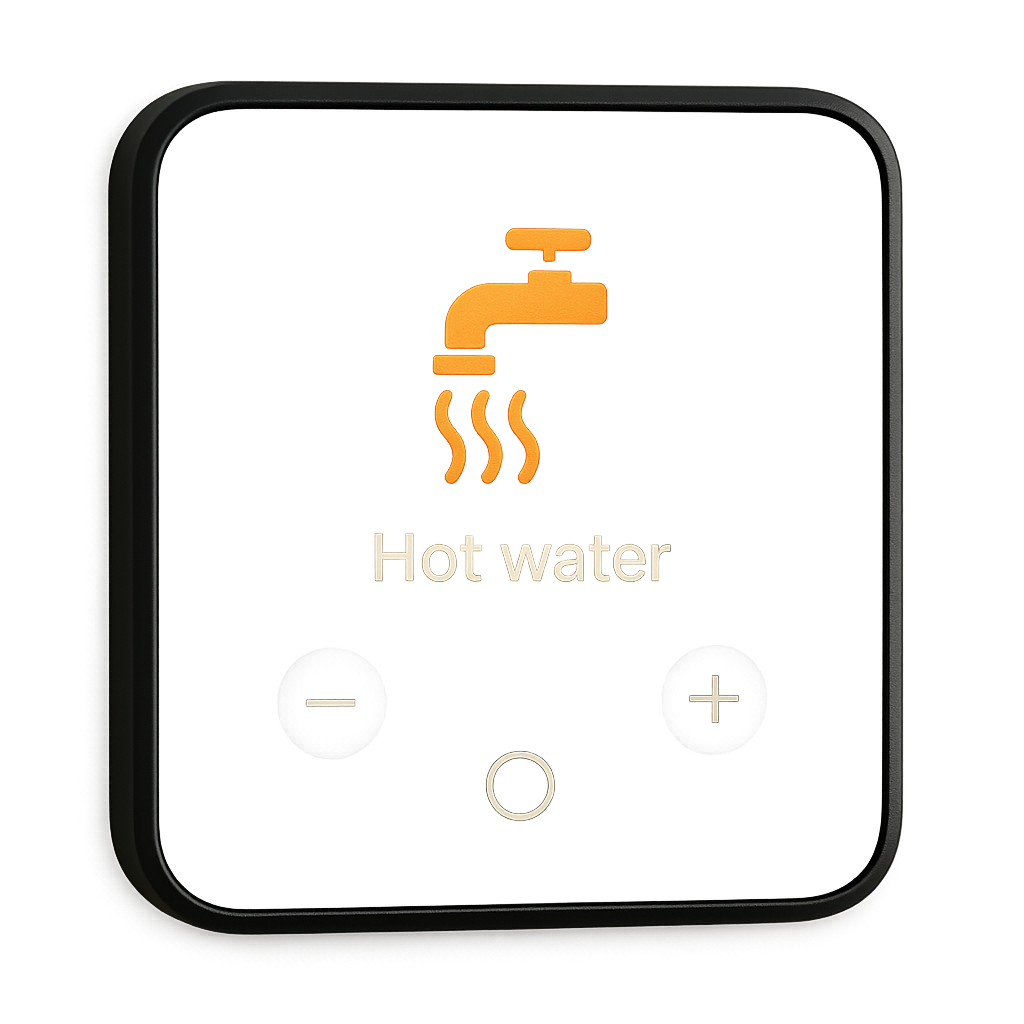
Typical. UK heating systems. Common types in the UK
Combi boiler or HIU: Scheduling is unnecessary. Hot water on demand
Boiler + hot water tank: Scheduling improves energy efficiency and safety significantly.
District heating (HIU or Combi boiler) with tank: Scheduling recommended to optimise efficiency and safety.
Smart heating.
No hot water requirements.
| Brand | Models (UK) | Scheduling |
|---|---|---|
| Google Nest | Nest Thermostat E | ❌ No |
| Hive | Hive Mini (Heating Only), Hive Active Heating V3 (Heating Only) | ❌ No |
| Tado | Wired Smart Thermostat (Heating Only) V3 and X | ❌ No |
Smart heating.
+ hot water scheduling.
| Brand | Models (UK) | Scheduling |
|---|---|---|
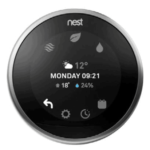
| Google Nest | Nest Learning Thermostat (3rd Gen) | ✅ Yes |
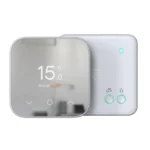
| Hive | Thermostat V4, Mini V4, Active Heating V3 | ✅ Yes |
| Tado | Wireless Starter Kit V3+, Tado X Starter Kit | ✅ Yes |
Standard. UK heating setup.
Combi boilers. Never run out.
Common types in the UK
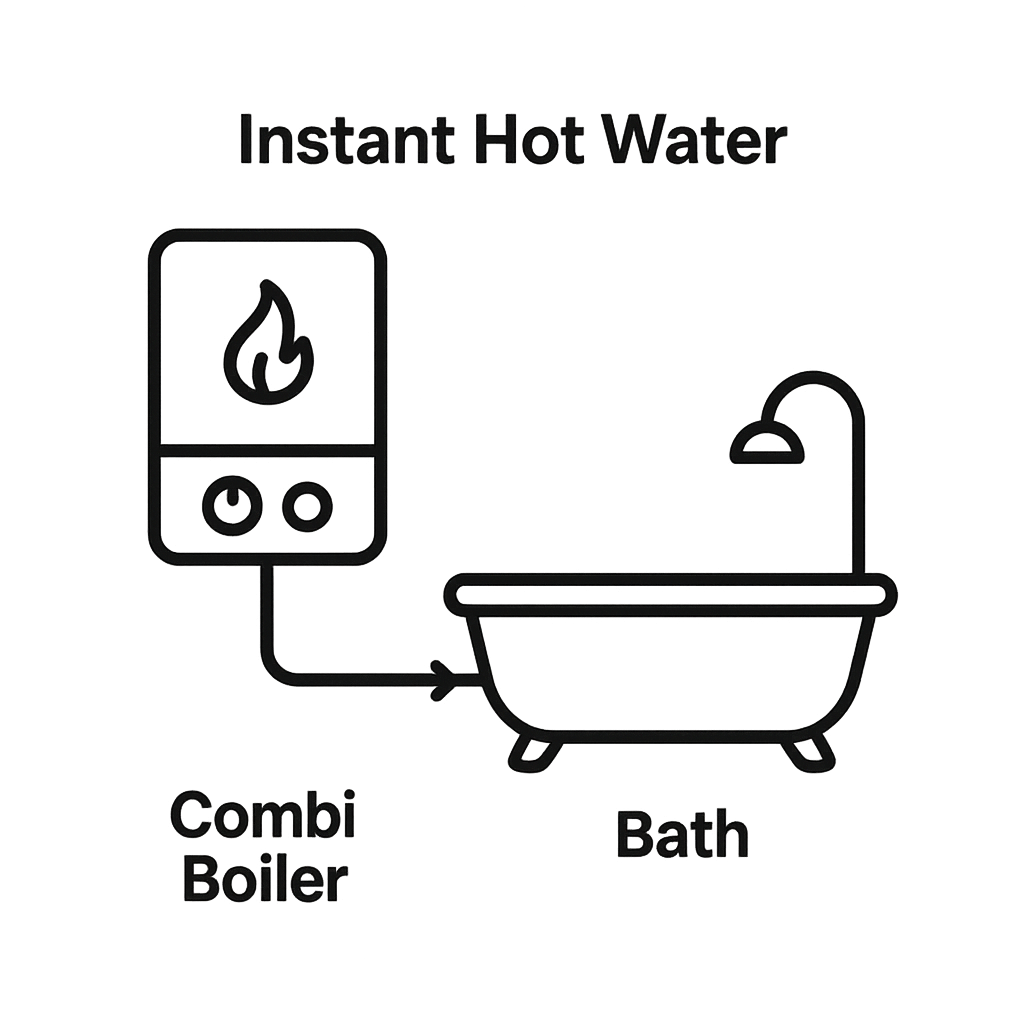
Combi boilers heat water directly from the mains when you turn on a tap, eliminating the need for scheduling hot water heating. Temperature control is usually managed directly on the boiler itself.
Scheduling needed? No
Temperature control: From boiler
Recommended smart thermostats: Google Nest, Hive, Tado
Why: There is no cylinder, so water is heated the moment you open a tap. There is nothing stored, so there is nothing to schedule.
Boiler +
Traditional hot water tank
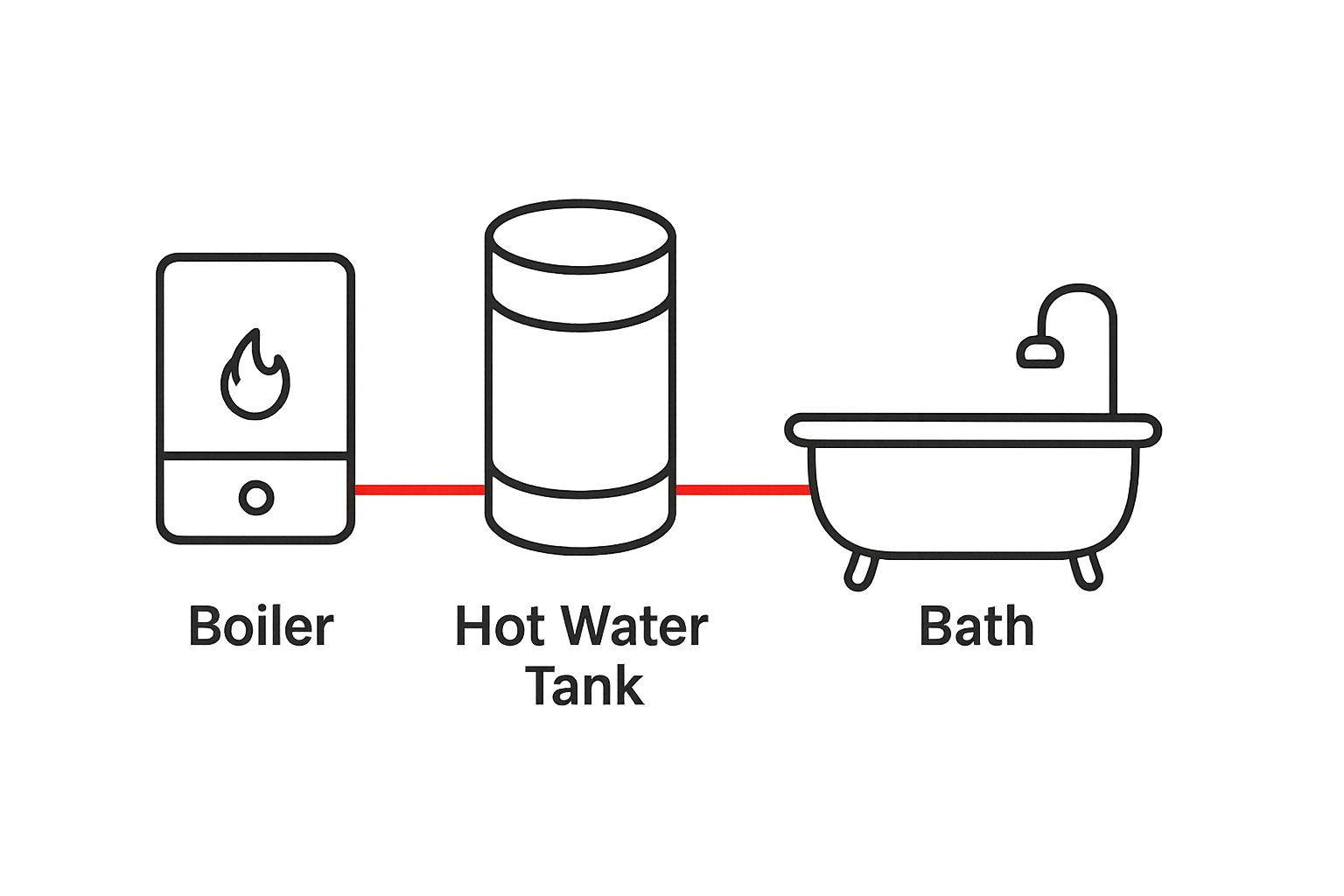
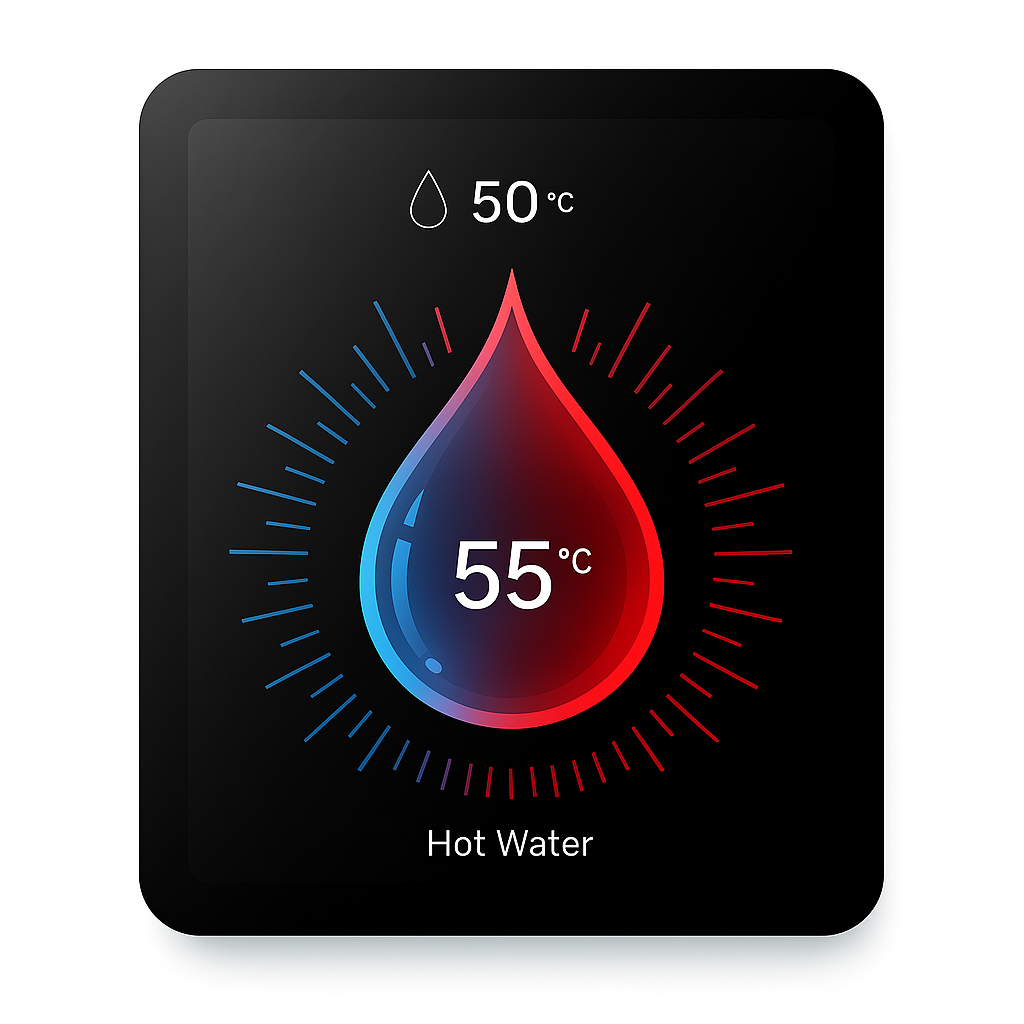
Homes with hot water tanks benefit greatly from scheduled heating. Scheduling ensures hot water is available when needed and improves energy efficiency by preventing unnecessary heating. Maintaining water temperatures around 60-65°C is essential to prevent Legionella bacteria growth. Smart thermostats like Google Nest, Hive, and Tado offer excellent scheduling and remote control features for managing systems with hot water tanks.
Scheduling needed? Yes
Temperature control: Tank thermostat and boiler flow temp
Recommended smart thermostats: Google Nest, Hive, Tado
Why: Stored water needs to know when to heat and when it has reached temperature — a separate decision from when the radiators come on.
District Heating.
HIU - Heat interface unit.
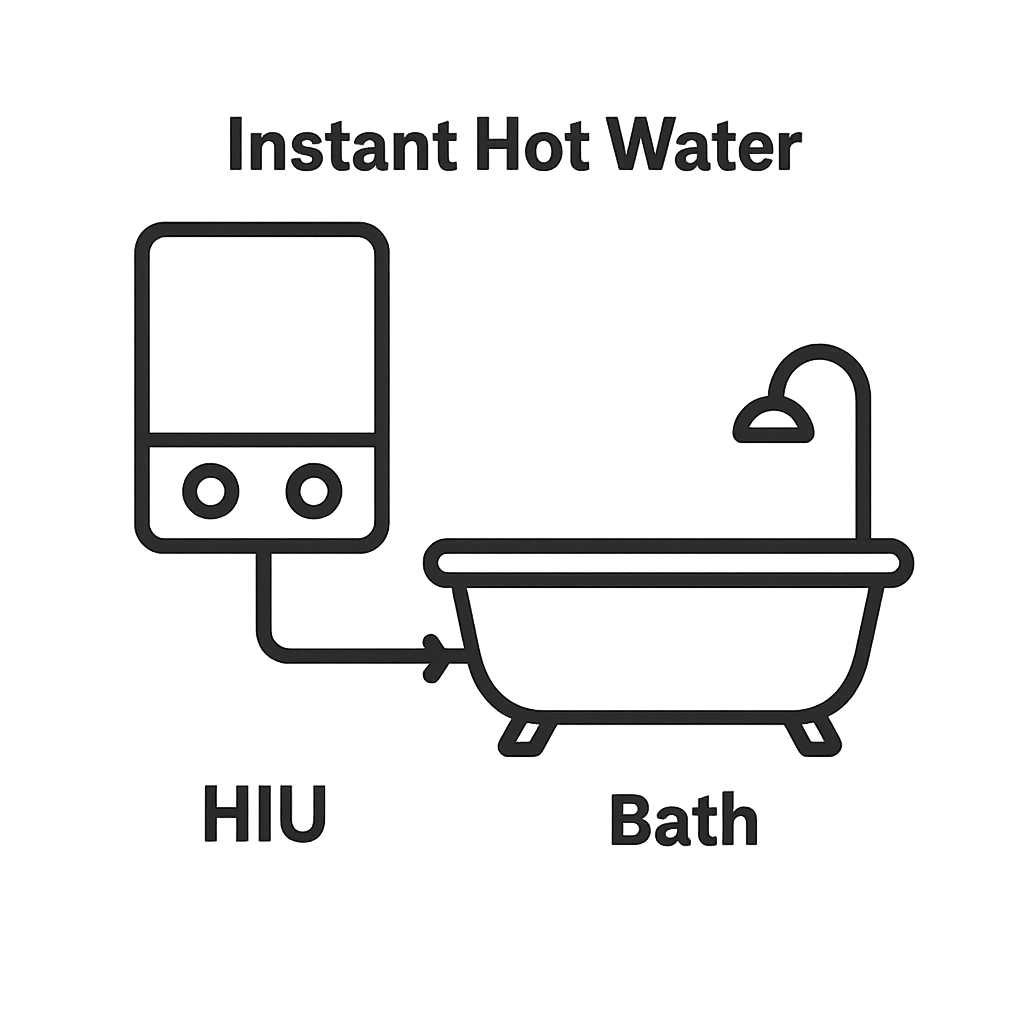
HIUs provide instantaneous hot water by drawing heat from district heating networks, similar to combi boilers. Because hot water is always available, separate scheduling is unnecessary.
Scheduling needed? No
Temperature control: Typically managed directly through HIU controls
Recommended smart thermostats: Google Nest, Hive, Tado
Why: An instantaneous HIU makes hot water on demand from the district network, so there is no store to time.
Combi Boilers & HIU's.
with integrated hot water tanks
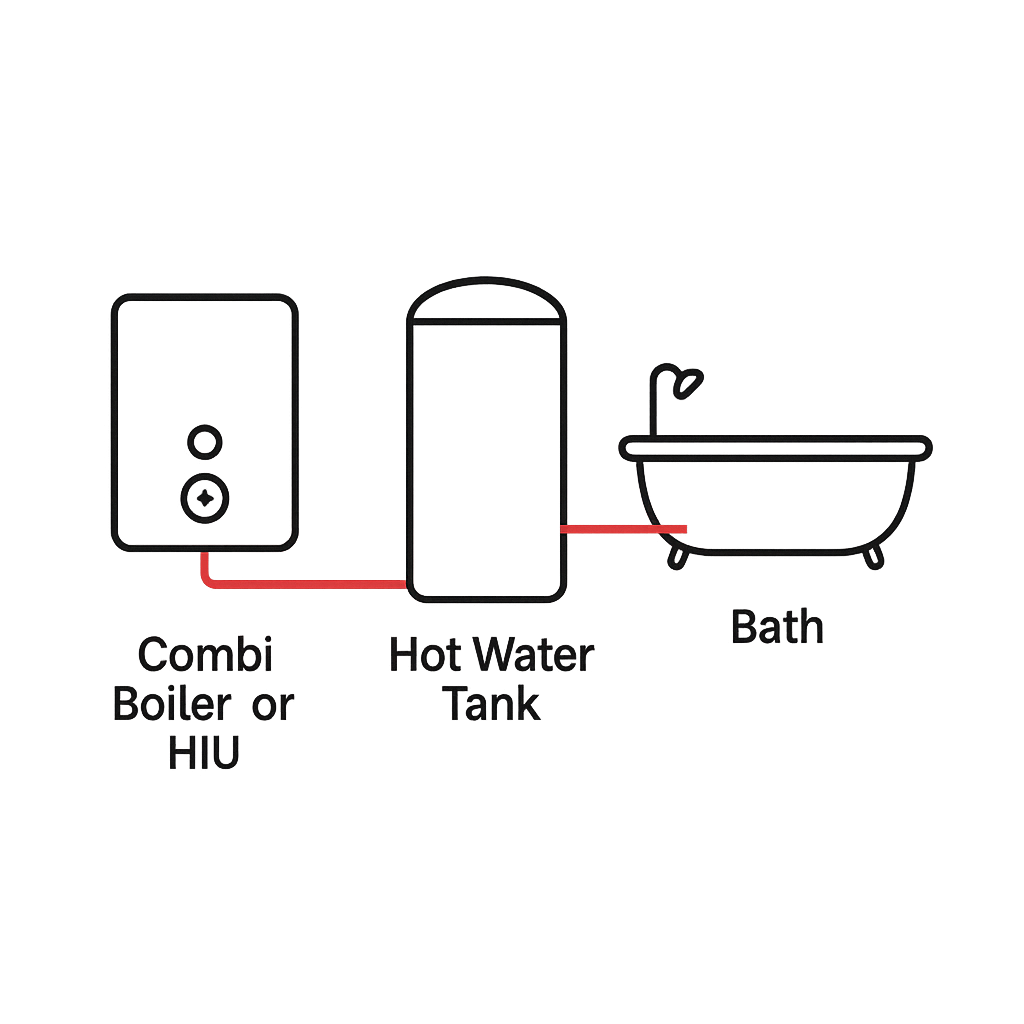
Though less common, some district heating setups and combi boilers include local hot water tanks. These require scheduling to manage energy effectively and maintain safe water temperatures. Smart thermostats with scheduling capabilities are ideal for these configurations.
Scheduling needed? Yes
Temperature control:Tank thermostat
Recommended smart thermostats: Google Nest, Hive, Tado
Why: Once there is a cylinder, hot water is being stored — so it needs its own time and temperature control.
British.
Conventional systems.
Combi boiler HIU District heating:❌
System boiler, Heat only boiler, Back boiler, with a hot water tank: ✅
HIU or Combi with tank: ❌ or ✅
| Heating System Type | Need for Schedule | Typical Control Mechanisms |
|---|---|---|
| Combi Boiler | No (for heating) | Boiler Thermostat |
| Hot Water Tank | Yes | Timer or Programmer & Cylinder Thermostat |
Table: Smart Thermostat Comparison (Hot Water Control Features)
| Brand | Model(s) with Hot Water Control | Boost Function |
|---|---|---|
| Google Nest | Nest Learning Thermostat (3rd Gen) | Yes |
| Hive | Thermostat V4, Thermostat Mini V4, Active Heating V3 | Yes |
| Tado | Wireless Smart Thermostat Starter Kit V3+ with Hot Water Control, Tado X Range | N/A (often integrated) |
Do I Need Separate Hot Water Controls?
It mainly depends on one thing: do you store hot water, or make it instantly?
| Your heating system | Separate hot water control? |
|---|---|
| Combi boiler | Usually no — hot water is heated when you open a tap. |
| Boiler + hot water cylinder | Yes — heating and stored hot water should be controlled separately. |
| Heat pump + cylinder | Yes — the heat pump controller normally manages a separate hot-water schedule. |
| Instantaneous HIU / district heating | Usually no — if there is no hot-water cylinder in your property. |
| HIU + cylinder | Yes — because hot water is being stored. |
| Thermal store / heat battery | Depends on the system — use the controls specified for that particular store. |
Why does a cylinder need separate control?
A hot-water cylinder needs to know when to heat the water and when the required temperature has been reached. This is separate from deciding when your radiators need heating.
Current Building Regulations guidance for stored domestic hot water calls for an independent hot-water time control and electronic temperature control.
What about Legionella?
Stored hot water also needs to be operated safely. Conventional systems commonly store water at around 60°C as part of controlling Legionella risk. Heat-pump systems may use a periodic high-temperature pasteurisation cycle or another approved method of bacterial control.
Your heating controls should work with these safeguards — not replace them.
Can a smart thermostat replace the cylinder thermostat?
No. A smart thermostat can control the hot-water schedule and tell the system when hot water is required, but the cylinder’s temperature and safety controls remain part of the hot-water system.
The simple answer
Have a combi with no cylinder?
You normally don’t need separate smart hot-water control.
Have a hot-water cylinder or store?
Choose controls that can manage heating and hot water separately.
What’s changed for 2026
Smart controls now handle the safety cycle for you. Current smart thermostats can run a hot-water heating cycle automatically if the cylinder has not been heated for a couple of days — useful when you have been away — rather than leaving the tank sitting at a low temperature.
Cheap-rate scheduling. Controls that support open standards such as Matter over Thread can be paired with a time-of-use electricity tariff, so the cylinder heats during the cheapest hours instead of at peak rate.
Hot water boost. Most current systems offer a one-touch boost for an unscheduled tank of hot water, on the wall unit as well as in the app.
There is no ban on replacing a gas boiler. You can still have a gas boiler installed or replaced. Grants exist to help if you do want to move to a heat pump.
Boiler Upgrade Scheme grants (England and Wales, figures from GOV.UK): £7,500 towards an air source or ground source heat pump, £5,000 towards a biomass boiler, and £2,500 towards an air-to-air heat pump. Homes off the mains gas grid heated by oil or LPG can get an extra £1,500 until March 2027. Eligibility rules apply — check GOV.UK before relying on any figure.
Standards referenced
- Legionella control
- HSE Approved Code of Practice L8 (opens in a new tab) and HSG274 (opens in a new tab). Water in a system with a hot water cylinder is stored at 60°C or higher, with taps reaching at least 50°C.
- Scald prevention
- Building Regulations Approved Document G (opens in a new tab). Hot water supplied to a bath in new builds or major conversions must not exceed 48°C, achieved with a thermostatic mixing valve (TMV2 / TMV3) fitted within about 2 metres of the outlet.
- Energy efficiency
- Building Regulations Approved Document L (opens in a new tab). Independent time and temperature control for stored hot water, and automated scheduling to reduce energy use.
- Heat pumps
- Run most efficiently at lower water temperatures, so a cylinder is typically held around 45–50°C day to day, with a periodic high-temperature pasteurisation cycle (often using an immersion heater) rather than holding 60°C continuously.
Guidance summarised for homeowners. Always follow the instructions supplied with your own cylinder, heat pump or heat interface unit.